· 7 min read
Glass Office Doors: Hinged, Sliding and Pivot Options
A guide to glass office doors: hinged, sliding, pivot and double doors, frameless vs framed, acoustic seals, hardware, access control and accessibility.
Key takeaways
- Framed hinged doors seal best for acoustic rooms.
- Sliding doors save space but rarely seal tightly.
- Pivot doors make a statement at receptions and boardrooms.
- Plan access control and accessible hardware early.
Door types
The door is the most-used part of any partition and often the weakest acoustically. Our office glass partitions hub covers how doors fit into wider layouts, and our glass office doors service page lists hardware options.
| Type | Strengths | Watch-outs |
|---|---|---|
| Frameless hinged | Clean look, low cost | Gaps limit acoustics |
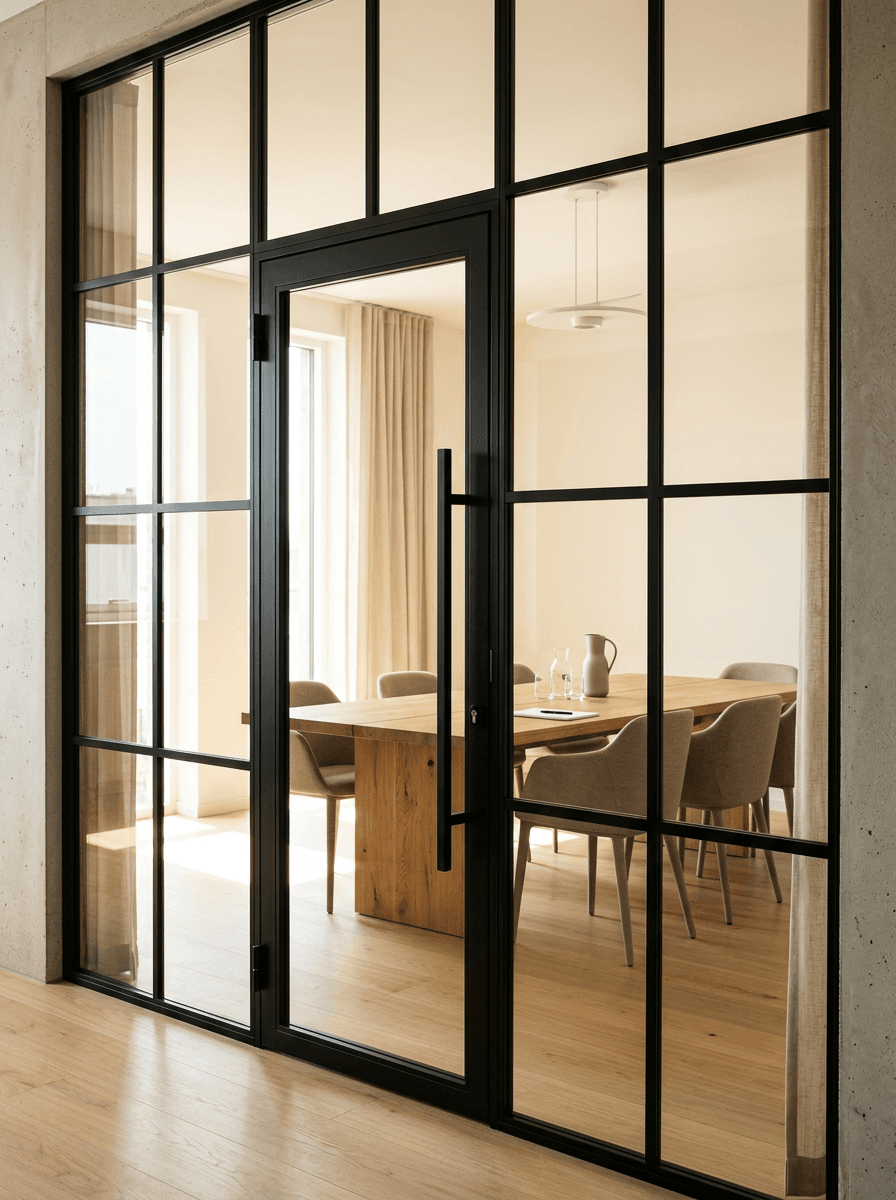
| Framed hinged | Best sealing, robust | Visible frame |
| Sliding | Saves space | Harder to seal |
| Pivot | Statement entrance | Heavier, higher cost |
| Double | Wide openings | Two leaves to seal |
Acoustic seals
Perimeter seals in the frame and an automatic drop-down seal at the threshold are what make a door acoustic. See acoustic glass partitions.
Hardware and access control
Options include pull handles, lever handles, floor springs, overhead closers, locks and electric strikes or magnetic locks linked to access control. Cabling routes need planning before installation.
Accessibility
Doors should have suitable clear opening widths, manageable opening forces, contrasting handles and manifestation. See our manifestation guide.
Questions
Can glass doors be fire-rated?
Yes, as tested framed fire doorsets with intumescent seals and closers.