· 7 min read
Internal Glass Screens for Offices and Homes
Internal glass screens explained: fixed screens, screens with doors, framed and frameless styles, where they work best in offices and homes, and what affects cost.
Key takeaways
- A glass screen divides a space without blocking light.
- Screens can be fixed, include a door or run floor to ceiling.
- Frameless suits modern offices; black-framed suits period and residential.
- Survey after floors and ceilings are finished for an accurate fit.
What is an internal glass screen?
An internal glass screen is a glazed panel or wall that divides a space while keeping light and sightlines. It can be a single fixed panel beside a stair, a full-width screen with a door, or a short screen above a solid wall. The systems are the same as those behind our glass partition walls.
Where screens work well
- Reception and entrance screens
- Corridor screens that pass light to internal areas
- Stair and landing screens
- Kitchen and living room dividers in homes
- Home office screens within a larger room
Framed or frameless
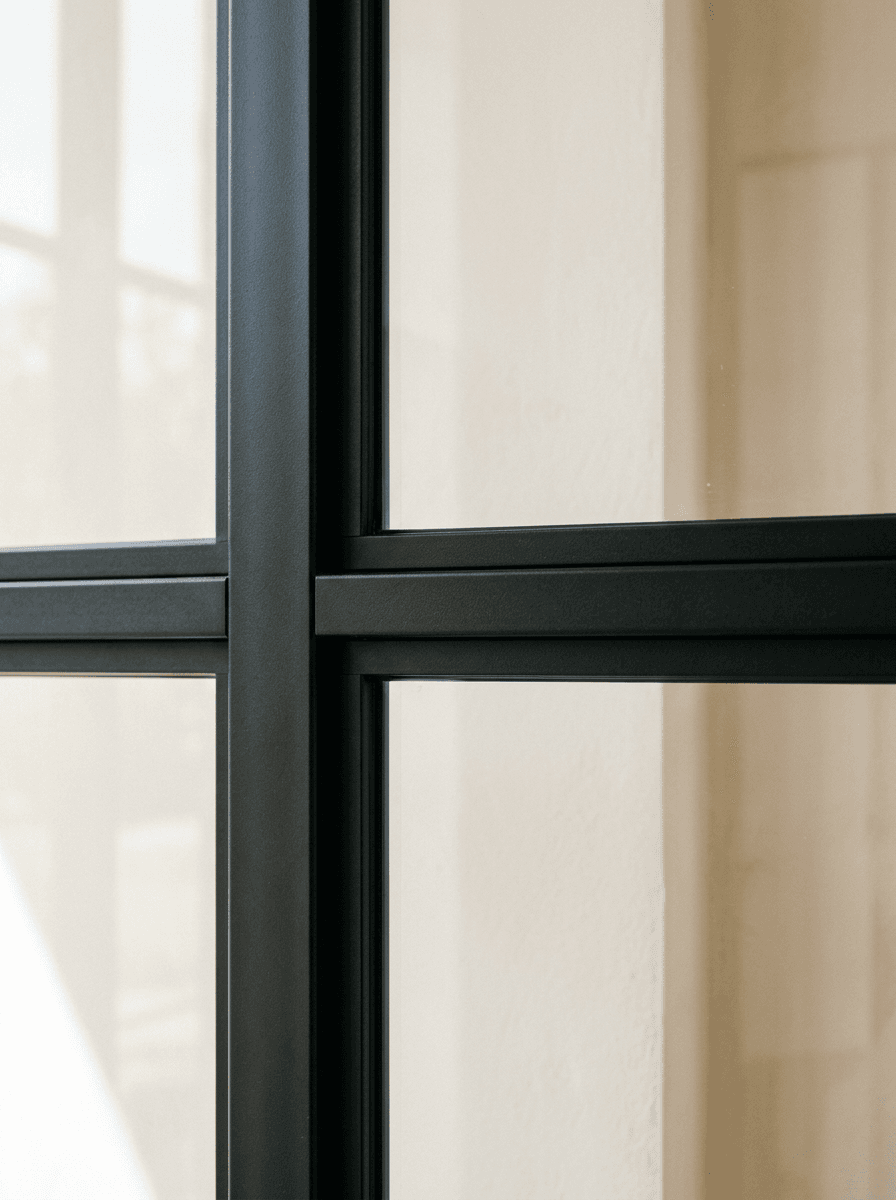
Frameless screens use slim channels and butt-jointed glass for the most open look, best suited to modern offices. Black-framed and Crittall-style screens add character and suit period buildings and homes. See our black-framed and Crittall-style hub and the room dividers guide.
What affects the cost
Cost depends on height, width, framing, glass type, whether a door is included and access to the room. Acoustic glass adds cost where sound separation matters. Our cost guide gives typical ranges.
Fixed, glazed-in and half-height screens
Internal glass screens come in several forms. Fixed full-height screens close off a space completely. Glazed-in openings fill an existing structural opening between rooms. Half-height screens sit on a dwarf wall or furniture and divide a space without fully enclosing it. Each suits different needs for light, acoustics and openness.
- Full-height screens for separation of noise and smell.
- Glazed-in openings to borrow light into hallways and stairwells.
- Half-height screens for reception desks, open kitchens and zoning.
- Screens with integrated doors to create a usable entrance.
Borrowing light in homes and offices
One of the most effective uses of internal glass is borrowing daylight into spaces with no windows: internal corridors, stair halls, bathrooms with obscured glass and central offices. A clerestory screen high on a wall brings light in while keeping privacy below. Frosted or reeded glass can do the same at full height.
Safety glass and visibility
Internal screens in critical locations, low down in walls or near doors, need safety glass. Large clear screens need manifestation. In homes, where children may run into glass, laminated glass gives extra reassurance because it stays in place if broken. See toughened vs laminated glass.
Questions
Is a glass screen the same as a glass partition?
Broadly, yes. “Screen” usually means a smaller or single run of glazing, while “partition” often means a full wall or room.
Do internal glass screens need safety glass?
Yes. Internal screens use toughened or laminated safety glass, with manifestation where required.
Can an internal glass screen be fitted into a load-bearing wall opening?
Yes, once the opening has been formed and supported by a lintel or beam as designed by a structural engineer. The screen itself is not load-bearing.