· 8 min read
Glass vs Solid Partitioning: Which Is Right for Your Space?
Compare glass and solid plasterboard partitioning on light, acoustics, cost, programme, flexibility and fire, and learn when a combination of both works best.
Key takeaways
- Glass keeps daylight and openness; solid walls offer storage, servicing and lower cost per metre.
- Solid walls generally reach high acoustic ratings more economically.
- Glass installs with less wet trade and dust, which suits occupied buildings.
- Many projects combine both: solid cores and glass fronts.
The core trade-off
Solid partitions, usually metal stud and plasterboard, have been the default for decades. Glass partitions trade some of the economy of solid walls for daylight, openness and a premium feel. The right answer depends on what each wall needs to do. Our glass partition walls hub explains the glass side in full.
| Factor | Glass | Solid (plasterboard) |
|---|---|---|
| Daylight | Transfers light deep into the plan | Blocks light |
| Acoustics | Good with acoustic or double glazing | High ratings economically |
| Cost per metre | Higher | Lower |
| Wall-mounted items | Limited | Screens, storage, shelves |
| Site works | Dry, clean, fast to install | Wet trades, drying, decoration |
| Reuse | Demountable options available | Usually demolished |
When glass is the better choice
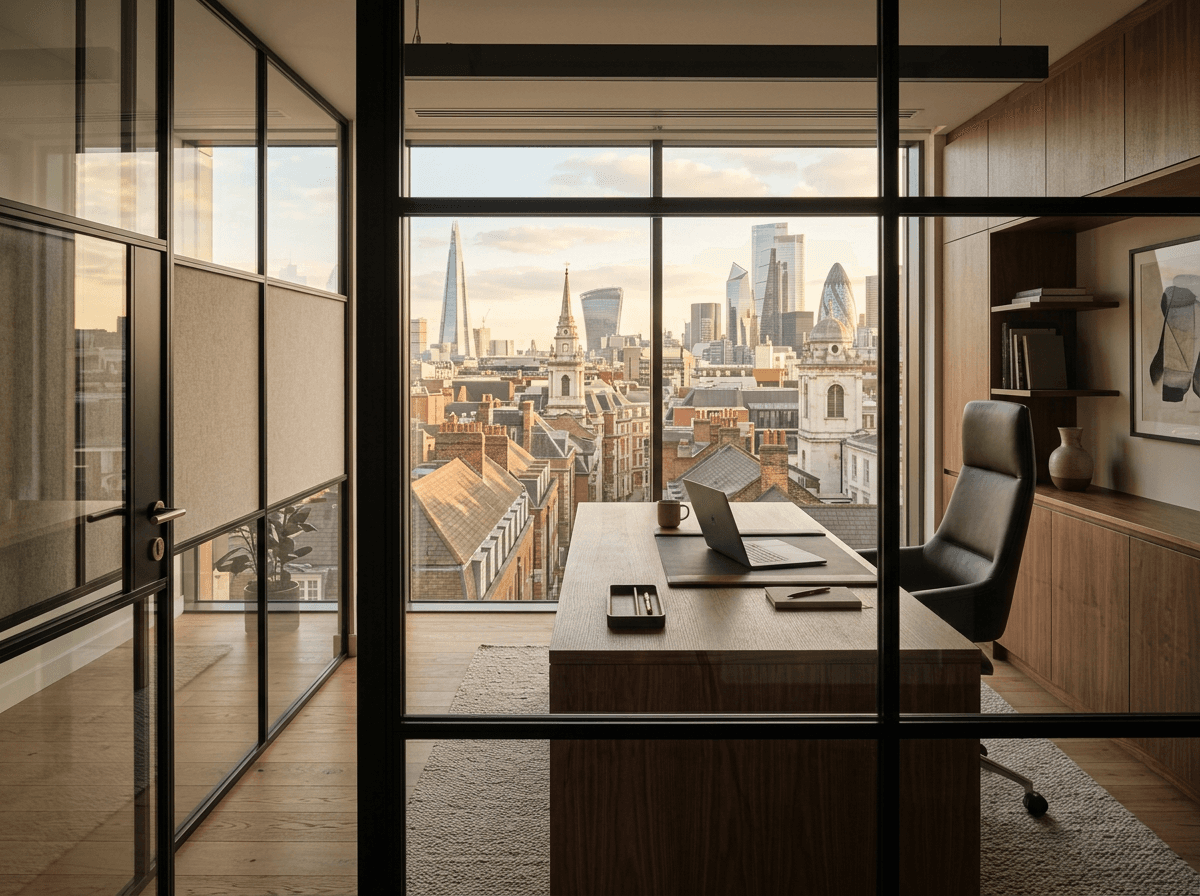
Glass is the stronger option where natural light matters to wellbeing and energy use, where managers want visibility across a team, where a space needs to feel premium, and where layouts may change. It also suits occupied buildings because installation is dry and relatively quick.
When solid walls make more sense
Solid walls are better for comms rooms, storage, toilets and back-of-house areas, for walls that carry screens, whiteboards or shelving, and where very high acoustic or fire performance is needed on a tight budget.
The hybrid approach
Most well-planned offices use both. Solid walls form cores and side walls between meeting rooms, carrying AV and services, while glass forms the corridor-facing fronts. This keeps daylight and openness where people walk and work while controlling cost and acoustics. See office glass partitions for layout ideas.
Questions
Is glass more expensive than plasterboard?
Per metre, yes, typically. The gap narrows once decoration, programme, disruption and potential reuse are considered.
Can glass partitions be as quiet as solid walls?
High-specification double-glazed systems can achieve strong ratings, but solid walls usually reach very high ratings for less cost.