· 7 min read
Glass Partitions for Schools, Colleges and Universities
Glass partitions for schools, colleges and universities: safeguarding vision panels, BB93 acoustics, durable safety glass, fire-rated corridors and holiday installation programmes.
Key takeaways
- Glazing supports safeguarding by keeping rooms visible from corridors.
- Teaching spaces must meet acoustic standards, set out in BB93 for schools.
- Laminated safety glass is the robust choice for busy, high-impact areas.
- Most school installations are programmed into holidays.
Why education buildings use glass partitions
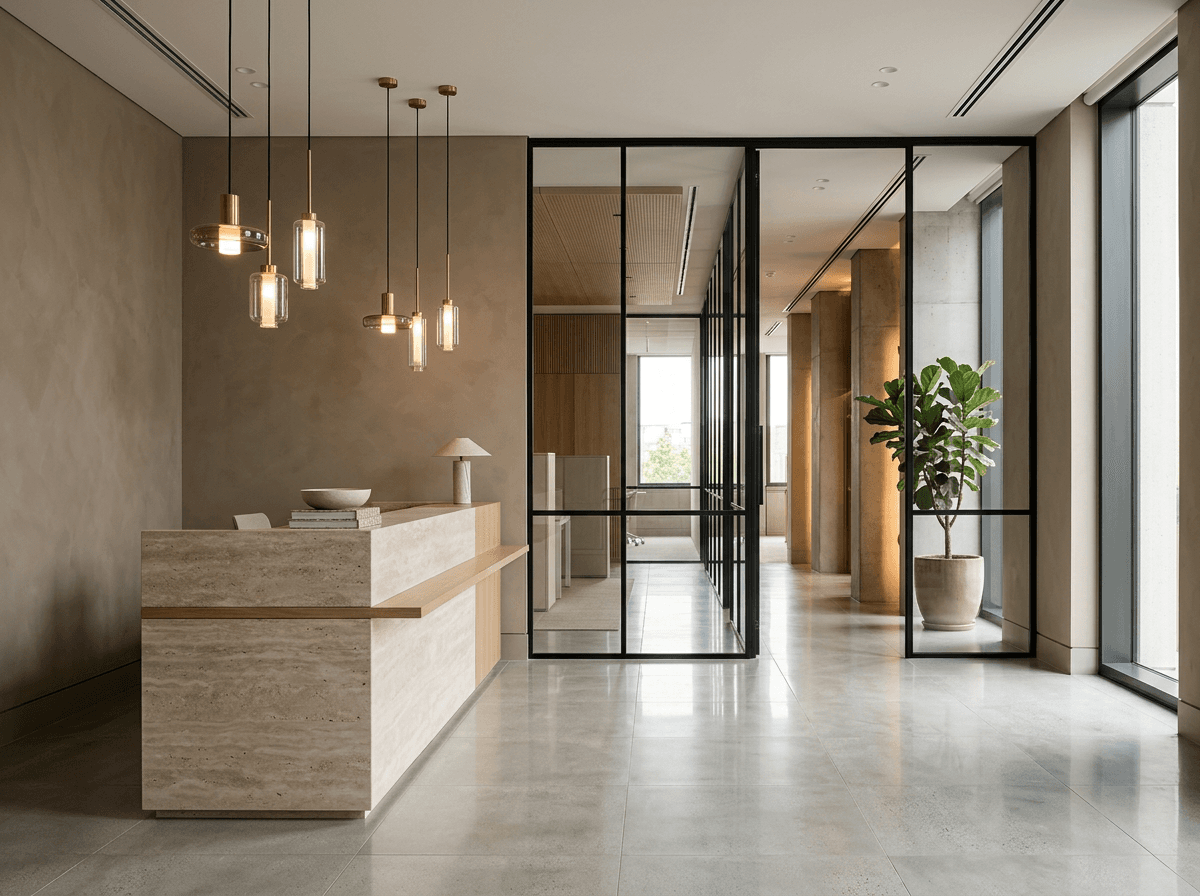
Schools, colleges and universities use glazed partitions for offices, small-group rooms, libraries, study pods and staff areas. Glass keeps these spaces visible from corridors, which supports safeguarding and passive supervision, and brings daylight into deep-plan buildings.
Universities and colleges also use glass for flexible study spaces and departmental offices, where layouts often change between academic years. Demountable systems suit those spaces well.
Safeguarding and visibility
Clear vision panels let staff see into rooms where one-to-one sessions, tutoring or pastoral meetings take place. Many schools prefer full-height clear glazing for these rooms, with manifestation at the required heights, rather than solid walls with a small vision panel.
Where some privacy is needed, a frosted band can obscure seated height while keeping heads and the room visible from outside.
Acoustics in teaching spaces
Schools in England are expected to meet the acoustic performance standards in Building Bulletin 93 (BB93), which set sound insulation targets between teaching rooms and corridors. A glazed partition into a classroom or music room must be specified with that target in mind, including the door.
For speech-sensitive rooms such as SEN rooms, counselling rooms and music practice rooms, double-glazed or acoustic laminated systems with sealed doors are usually needed. See acoustic glass partitions for system options.
Durability and safety glass
Education buildings take heavy use. All partition glass must be safety glass, but in corridors and areas where impact is likely, laminated glass is often preferred because it stays in place if broken. Our guide to toughened vs laminated glass explains the difference.
- Laminated or toughened-laminated glass in high-traffic zones
- Robust door hardware and finger-guard options
- Fire-rated glazing where partitions line escape corridors
- Manifestation that meets Approved Document K
Installing during term time and holidays
Most school work is planned for summer, Easter or half-term holidays. We survey during term, manufacture in advance and install within the holiday window. Where work has to happen during term, we can phase it zone by zone with secure site separation and DBS-checked staff where required.
Guidance for schools
Acoustic performance standards for teaching spaces are published by the Department for Education in BB93: acoustic design of schools (opens in a new tab). Safety glazing and manifestation follow Approved Document K (opens in a new tab), as in other buildings.
Questions
Can installation be completed in the summer holiday?
Usually, yes. Surveying and ordering during the summer term means glass is ready to install as soon as the holiday starts.
Do glass partitions meet BB93 acoustic requirements?
They can, provided the glass build-up, door and ceiling details are specified to the target for that room. We confirm this at design stage.
Is glass safe in school corridors?
All partition glass is safety glass. Laminated glass is often specified in busy areas because it holds together if it breaks.