· 10 min read
Acoustic Glass in Crittall-Style Partitions: Options and Trade-Offs
How to get real sound privacy from Crittall-style glass walls: acoustic laminated glass, double glazing, glazing bar choices, doors, decorative glass and realistic performance.
Key takeaways
- Crittall-style walls can be acoustic, but the grid has to be designed for it.
- Applied glazing bars over large acoustic panes outperform many small individual panes.
- Double-glazed steel-look systems give the best privacy, with slightly deeper frames.
- The door and ceiling detail usually decide the result, not the glass alone.
Can a Crittall-style wall be acoustic?
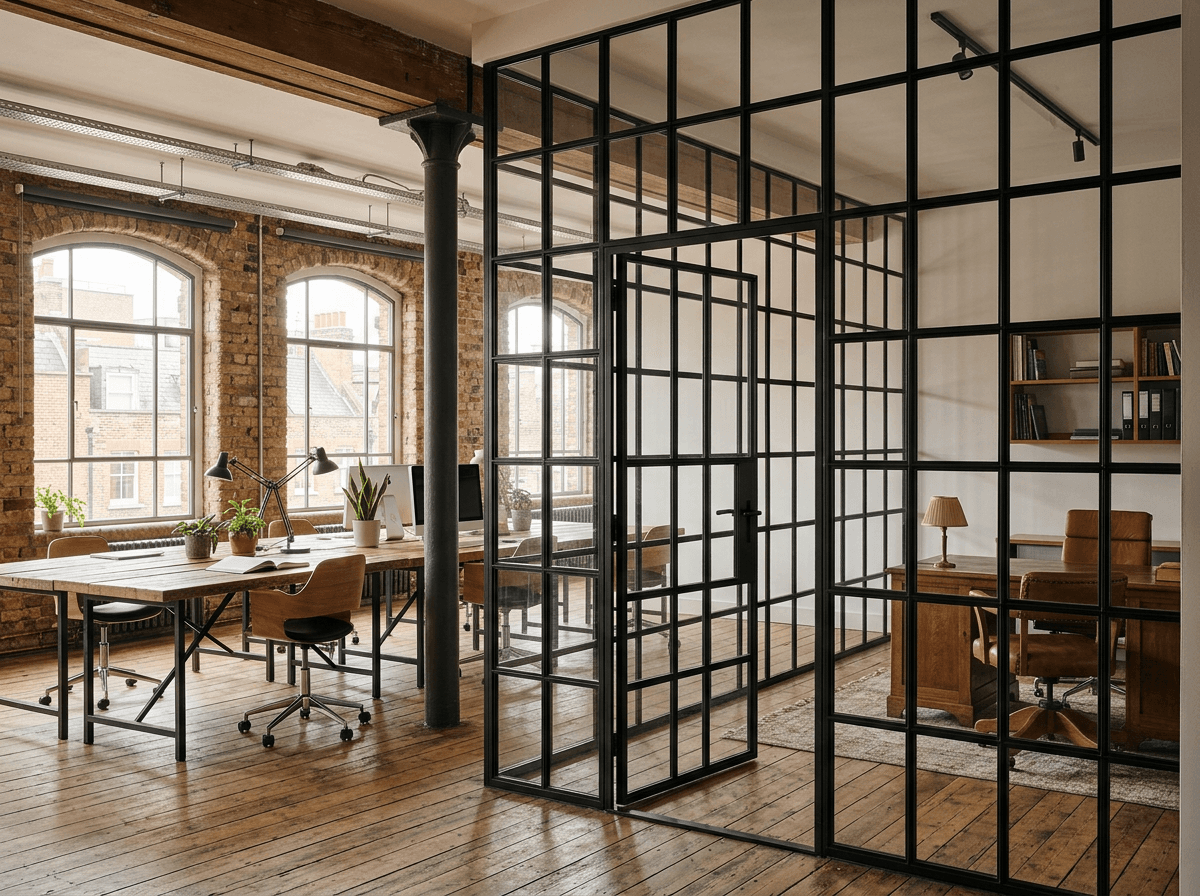
Yes. The industrial grid is a visual feature, and it can sit on top of glass chosen for sound reduction. Getting there means deciding on acoustic performance at the start, because it affects the frame depth, the type of glazing bar, the door and the ceiling detail. For the basics of sound ratings, see Rw ratings explained. For the wider family of systems, see our black-framed and Crittall-style hub.
Glass options, from basic to boardroom
Three glass build-ups cover most projects. Indicative levels below are typical laboratory figures for tested framed systems. Actual figures depend on the specific system and its test data, and performance on site is usually a few decibels lower.
- Standard toughened or laminated safety glass: fine for visual separation and light privacy, but conversation will still carry.
- Single-glazed acoustic laminated glass (glass bonded with a sound-damping interlayer): a strong upgrade for meeting rooms, often around Rw 37–42 dB in suitable framed systems.
- Double-glazed acoustic units (two panes with a cavity, often in different thicknesses): the choice for boardrooms, HR and confidential rooms, often Rw 45 dB and above.
Glazing bars: the detail that matters most
How the grid is made has a big effect on acoustics. True divided panes, where every square is a separate piece of glass, add a long run of glass-to-frame joints. Each one is a possible leak, and small panes limit how thick the glass can be.
Applied bars are slim profiles bonded to both faces of a single large pane. They give the same look while keeping one continuous acoustic pane. On double-glazed units, a matching bar inside the cavity lines up with the outer bars, so the grid looks solid from an angle. For most acoustic Crittall-style rooms we recommend applied bars over laminated or double-glazed panes.
Frame depth and sightlines
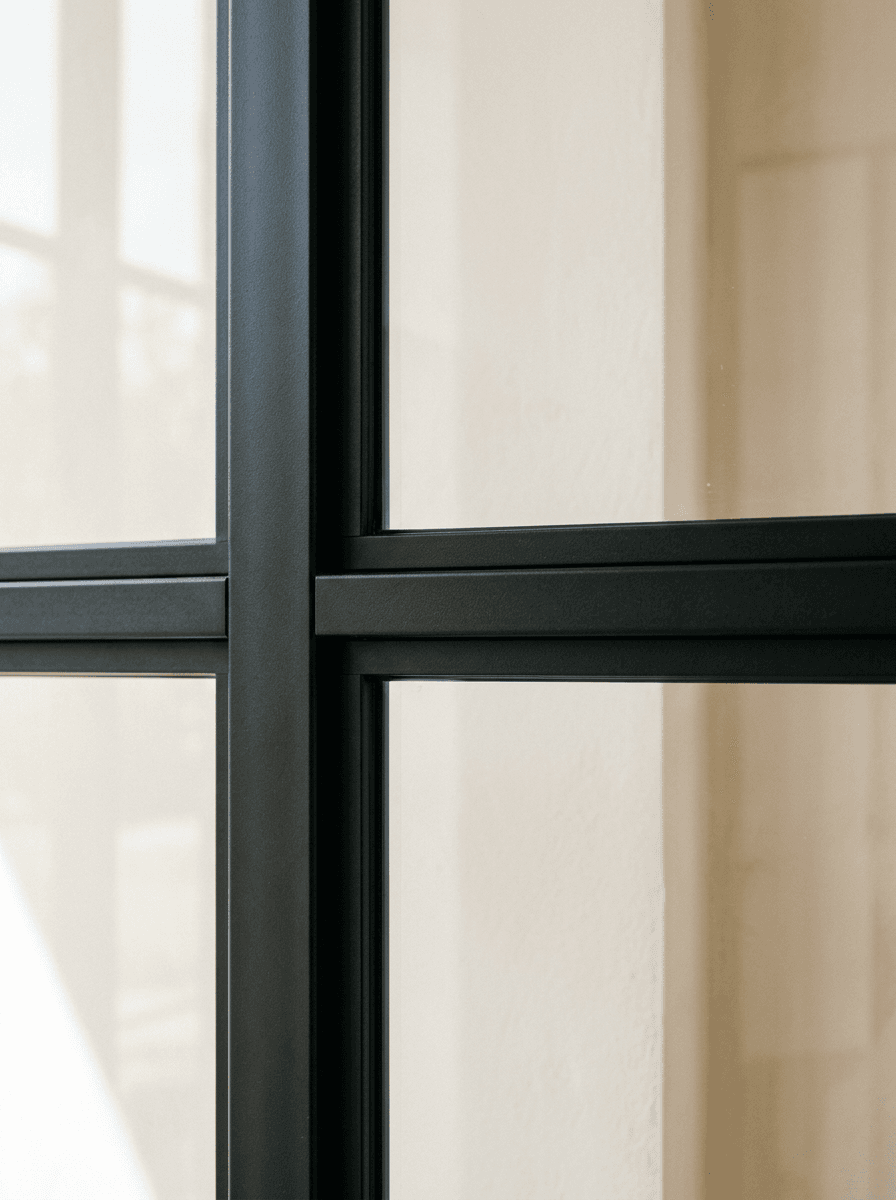
Heavier acoustic glass needs a frame deep enough to hold it, so acoustic versions can have slightly wider profiles than the slimmest decorative screens. Face widths can usually stay close to the classic look, and the extra depth reads as solidity rather than bulk. Solid steel frames are the slimmest but limit glass build-ups. Steel-look aluminium handles thicker and double glazing more easily. See steel-look vs aluminium framing.
Doors: where most acoustic rooms fail
A Crittall-style door can match the screen visually while performing acoustically, but only if it is a framed door with perimeter seals and an automatic drop-down seal at the threshold. Single doors seal better than double doors, where the meeting edge is an extra gap. Sliding doors look good but are hard to seal and suit open, semi-private spaces better than confidential rooms. More on this in glass office doors.
Reeded, fluted and frosted glass
Reeded and fluted glass are popular in Crittall-style designs for privacy. Patterned glass is not acoustic in itself, but it can often be laminated with an acoustic interlayer to a clear pane, or used as one pane in a double-glazed unit. Availability varies by pattern and size, so confirm early. Frosted interlayers and manifestation films give visual privacy and add almost nothing acoustically. See our manifestation guide.
Ceilings, junctions and services
Even the best glass is undone by sound travelling over the top through a suspended ceiling void, or around the sides at wall junctions. Acoustic Crittall-style rooms need a ceiling void barrier or a partition taken up to the slab, sealed head and base tracks, and sealed junctions. We cover every path in where acoustic performance is lost.
Quick guide by room type
- Feature screen or kitchen divider at home: toughened or laminated glass, any grid style.
- Focus room or small meeting room: single-glazed acoustic laminate, applied bars, sealed single door.
- Boardroom, HR or interview room: double-glazed acoustic units, applied and cavity bars, framed door with drop-down seal, ceiling void treated.
- Home office next to a living space: single acoustic laminate with a sealed door is usually enough.
Questions
Does a Crittall-style grid reduce acoustic performance?
Applied bars over large panes have little effect. A grid of many separate small panes can reduce performance because of the extra joints, so it is not the best choice for confidential rooms.
Can existing Crittall-style screens be upgraded acoustically?
Sometimes. Seals, the door threshold and the ceiling void can often be improved. Swapping to thicker acoustic glass depends on whether the frame has room for it, which we check on survey.
Is double glazing worth it for a home office?
Usually not. A single acoustic laminated pane with a well-sealed door gives a noticeable improvement at a lower cost. Double glazing makes more sense for calls that must stay private or rooms next to noisy spaces.
Will acoustic glass look different?
Acoustic laminated glass looks the same as clear glass. Double-glazed units look slightly thicker at the edges, which the frame hides.
Related guides