· 6 min read
Frameless vs Black-Framed Glass Partitions
A side-by-side comparison of frameless and black-framed glass partitions covering appearance, acoustics, doors, cost drivers and suitability.
Appearance
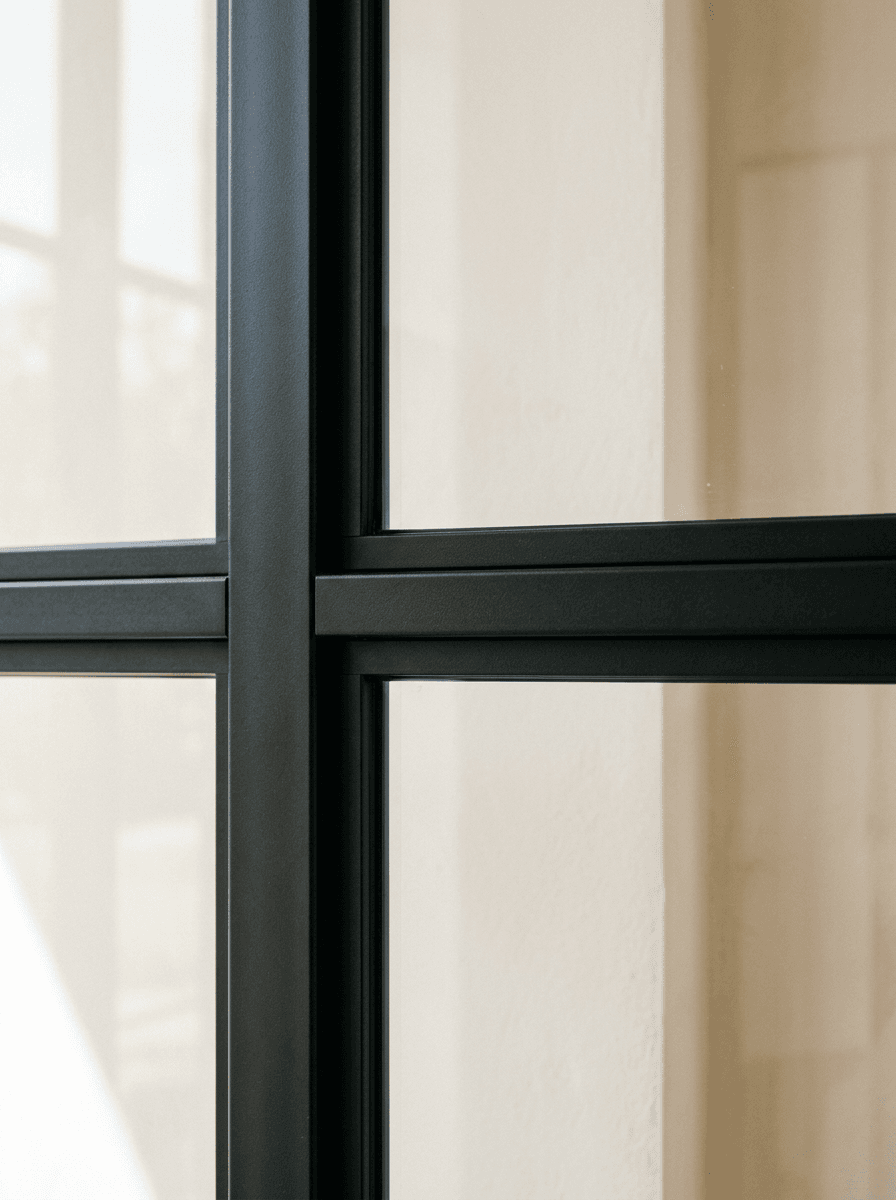
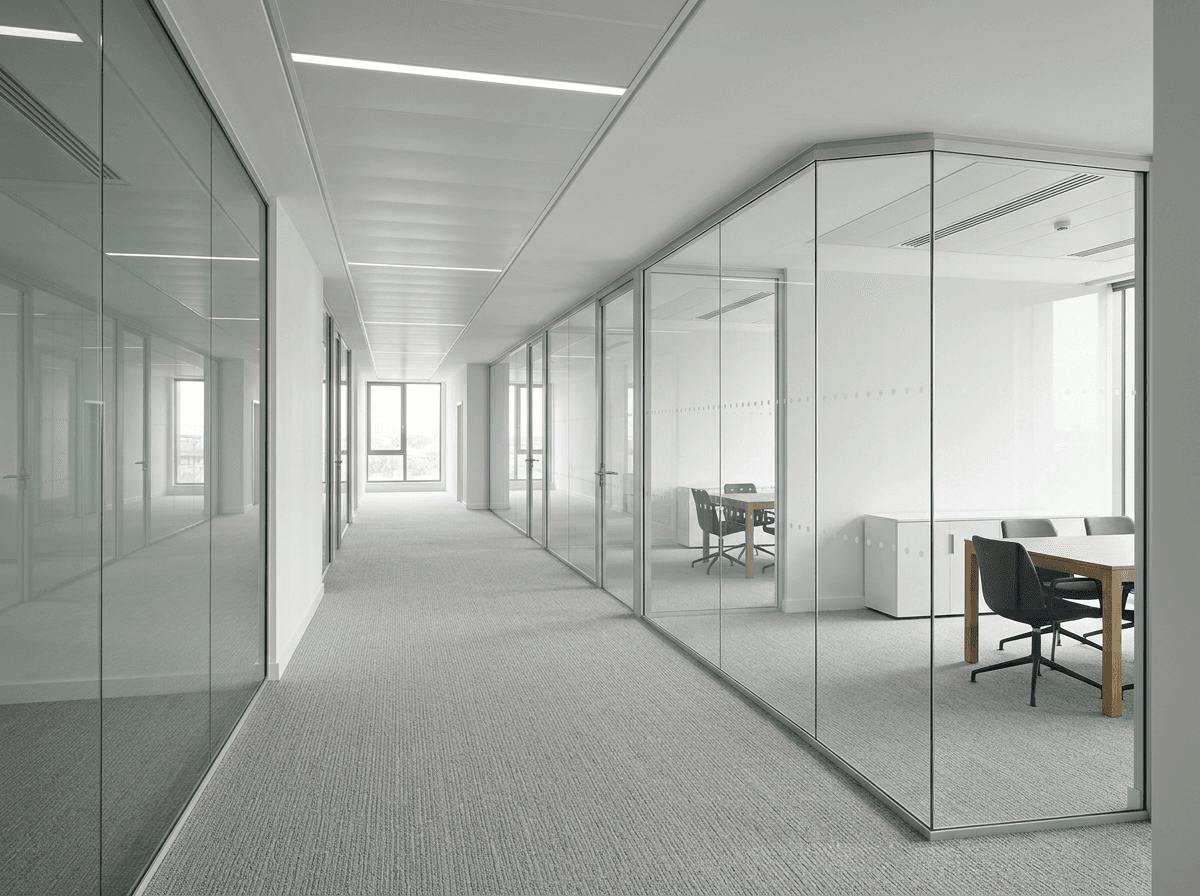
Frameless partitions minimise visible framing so the glass reads as a single, uninterrupted plane. Black-framed partitions celebrate the frame, adding rhythm and definition. Neither is better — the right choice depends on the interior you want to create.
Doors and seals
Framed systems generally allow better perimeter seals around doors, which helps with acoustic privacy. Frameless doors can still be sealed, but the options are more limited.
Which to choose
As a broad guide:
- Choose frameless for a minimal, open, corporate feel and long runs of glass.
- Choose black-framed for character, structure and a design-led interior.
- Consider acoustic specification separately — both systems can be upgraded.
Light and openness
Frameless glazing uses glass panels joined with clear or slim silicone joints, held in discreet head and base channels. It maximises daylight and keeps sightlines almost uninterrupted, which is why it is popular for corridor walls and offices where the aim is to make the floor feel as open as possible.
Black-framed glazing introduces vertical and horizontal lines. That reduces transparency slightly but adds rhythm and structure. In large open floors this can be an advantage, giving glass rooms a presence that frameless walls lack.
Acoustics and doors
Framed systems tend to integrate doors and seals more easily. A framed door closes against a rebated frame with continuous seals, which helps acoustic performance. Frameless doors rely on edge seals and patch fittings, which can be very good but generally leave a little more leakage. If confidential rooms are a priority, a framed or double-glazed system is often the more reliable route. See acoustic glass partitions.
Tolerance and site conditions
Frameless glazing is unforgiving of uneven floors and out-of-level ceilings, because the joint lines make any discrepancy visible. Framed systems absorb tolerance within the profiles. In older buildings with irregular structure, framing can produce a cleaner result for less remedial work.
A quick decision guide
As a rule of thumb:
- Choose frameless for maximum light, minimal aesthetics and long corridor runs.
- Choose black-framed for character, defined rooms and easier acoustic door integration.
- Mix both where different zones have different priorities.
- Review our frameless and demountable hub and black-framed hub side by side.
Questions
Which option is easier to clean?
Frameless glass has fewer edges and is quick to wipe down. Framed systems have more profile surfaces but hide fingerprints at panel edges better. Both are straightforward with a standard glass cleaner.
Can I add black frames to an existing frameless wall later?
Not in a structural sense, but applied decorative glazing bars can create a framed look. For a genuine framed system, the wall would need to be replaced.