· 8 min read
How to Soundproof a Meeting Room with Glass
How to make a new or existing glass meeting room quieter: diagnosing the leak, upgrading doors and ceilings, replacing glass and what results to expect.
Key takeaways
- Find where sound escapes before spending on new glass.
- Door seals and ceiling barriers are the most cost-effective upgrades.
- Raising the glass rating usually means replacing panes or the system.
- Specify new rooms with a lab rating above your on-site target.
Start by finding the leak
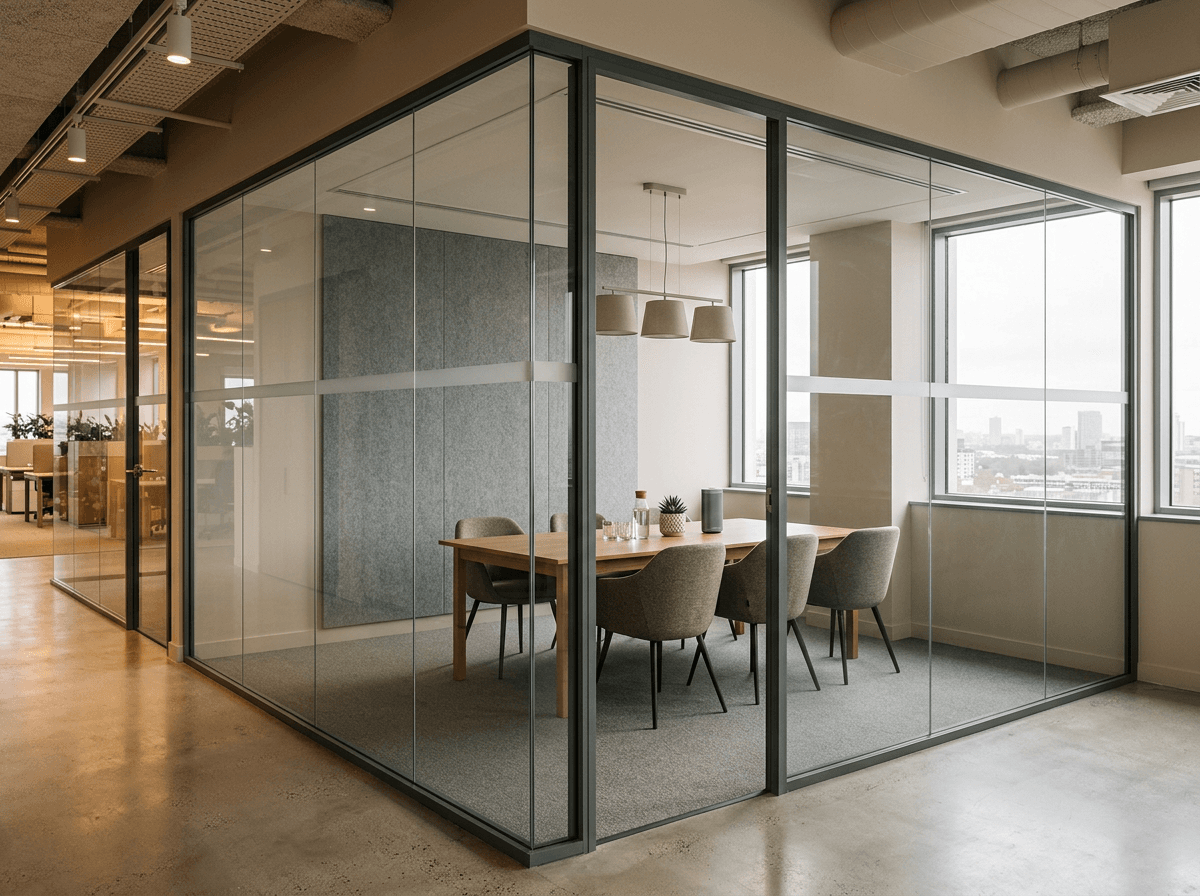
Most noisy glass meeting rooms leak through the door, the ceiling void or junction gaps rather than the glass itself. Stand outside while someone talks inside: if speech is loudest at the door edges or from the ceiling, the fix is detailing, not glass. Our acoustic glass partitions hub explains each path.
Upgrading an existing room
- Replace a frameless door with a framed, sealed door
- Add an automatic drop-down threshold seal
- Install acoustic barriers in the ceiling void above the partition
- Seal head, base and wall junctions
- Add soft finishes inside the room to reduce reverberation
- Replace panes with acoustic laminated glass if the system allows
Specifying a new room
For a new room, set the target first, then choose a system with tested data a few decibels higher. Use single or double glazing to suit, and see Rw ratings explained for target levels.
What results to expect
Sealing a door and treating the void can make a clearly noticeable difference. Getting to boardroom-level privacy from a basic single-glazed room usually requires a new double-glazed system. See where acoustic performance is lost.
Questions
Will acoustic film on glass help?
Very little. Films add visual privacy but almost no acoustic mass.