· 7 min read
Glass Partitions for Healthcare, Clinics and Dental Practices
How glass partitions are specified for clinics, dental surgeries, private practices and healthcare offices: hygiene, patient privacy, observation, acoustics and fire safety.
Key takeaways
- Glass gives staff sightlines while keeping rooms separate and easy to clean.
- Integral blinds avoid the dust and cleaning problems of fabric blinds.
- Consultation rooms need acoustic glazing and sealed doors for patient confidentiality.
- Fire-rated glazing is often needed where partitions form escape routes.
Why healthcare spaces use glass partitions
Private clinics, dental practices, physiotherapy studios and healthcare offices all need the same things from their interior walls: clear separation between rooms, good sightlines for staff, surfaces that are easy to keep clean, and privacy where patients are seen.
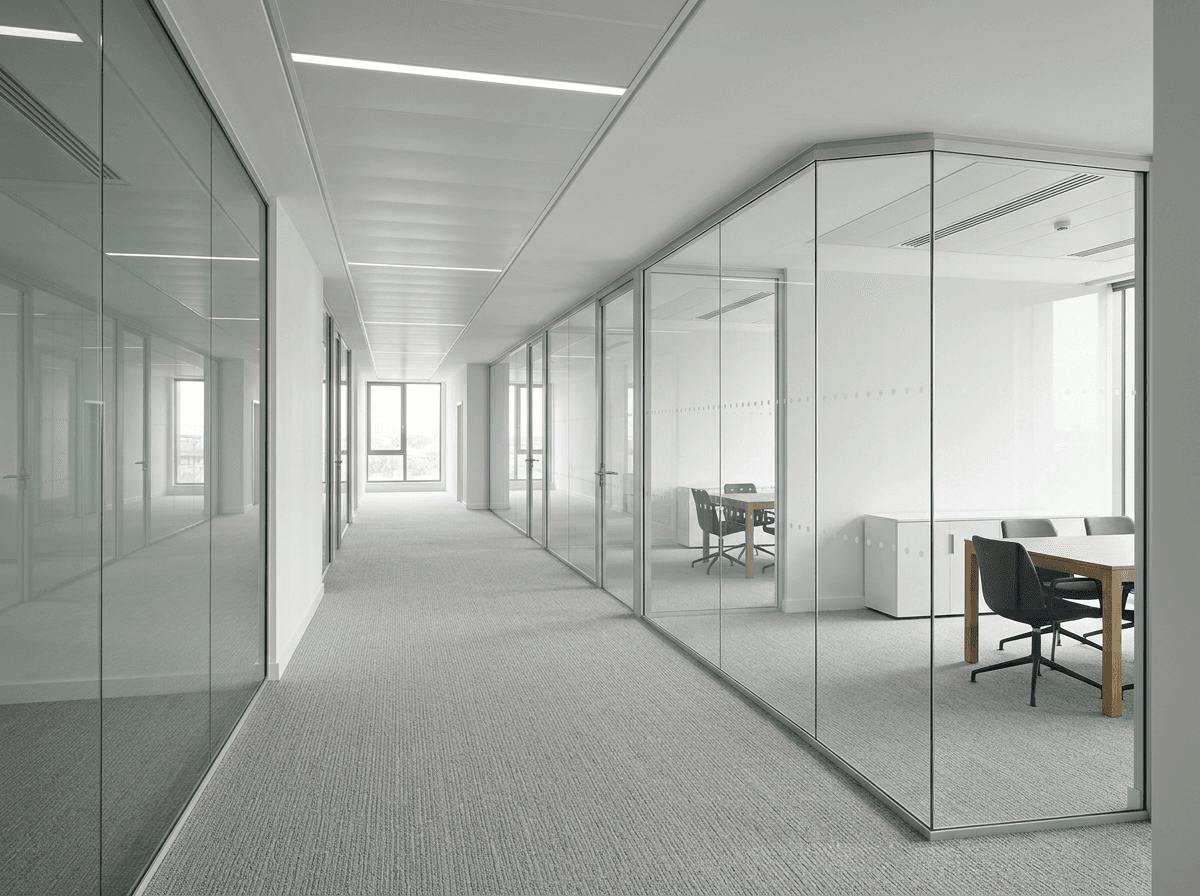
Glass partitions do all of these. A glazed reception or nurse station lets staff see waiting areas, glazed corridors stay bright without windows, and smooth glass and powder-coated frames wipe down quickly between patients. For the system options, start with our commercial interior glazing hub.
Hygiene and cleanability
Glass is non-porous and tolerates regular cleaning with standard clinical cleaning products. The details around the glass matter as much as the glass itself.
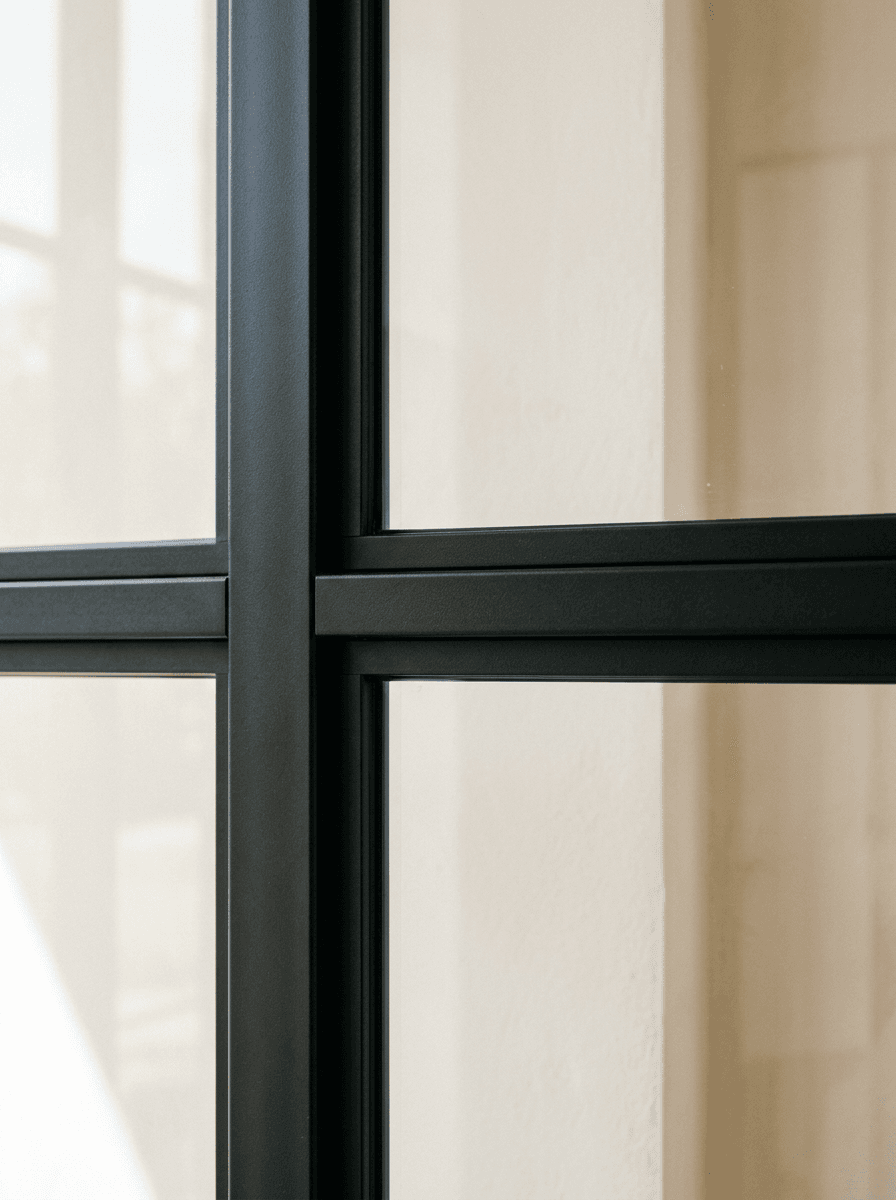
- Flush glazing beads and minimal ledges where dust can collect
- Sealed joints rather than open gaps between panels
- Integral blinds inside double glazing instead of fabric blinds or curtains
- Powder-coated or anodised frames that resist cleaning chemicals
- Door hardware chosen for easy wipe-down
Patient privacy and confidentiality
Consultation and treatment rooms need both visual and acoustic privacy. Visual privacy usually comes from frosted bands, integral blinds or switchable glass, so rooms can be open when empty and private when in use. Our guide to smart glass and privacy film compares the options.
Acoustic privacy is harder. Conversations about health are sensitive, so consultation rooms usually justify a double-glazed or acoustic laminated system with a sealed door. The Rw ratings guide explains the performance levels.
Plan privacy room by room: a staff office may only need a frosted band, while a consultation room needs acoustic glass, a sealed door and a blind.
Fire safety and compliance
Where a partition forms part of a protected escape route or separates fire compartments, it needs a tested fire-rated glazing system. This is common in clinics within multi-storey buildings. See fire-rated glass partitioning for how integrity and insulation ratings work.
NHS facilities follow Health Technical Memoranda and Health Building Notes. Private clinics may not be bound by them, but they are a useful reference for infection control and room layout. We work to the specification your designer or compliance lead sets.
Questions
Can glass partitions be used in treatment rooms?
Yes. Glazing with integral blinds or switchable glass gives privacy during treatment, while sealed joints and smooth surfaces keep the room easy to clean.
Are integral blinds better than standard blinds for clinics?
Usually. The blind sits sealed between two panes of glass, so it does not collect dust and never needs cleaning.
Can you work in an operating clinic?
Yes. We can phase installation room by room and work out of hours to keep the practice open.